
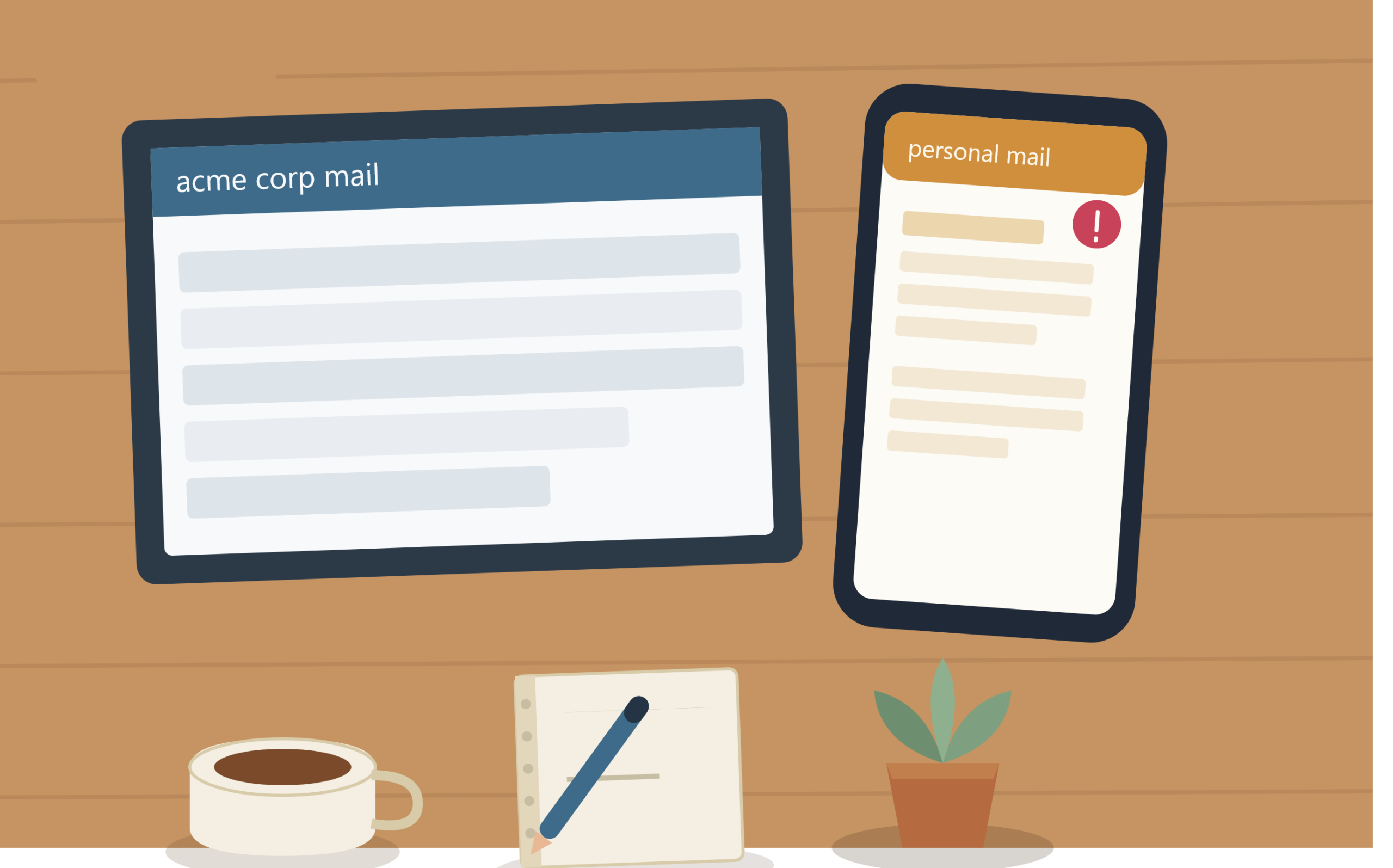
It happens all the time: You need to send yourself a file so you can finish it at home. A coworker is having trouble accessing a document, so you send it from your personal email instead. Maybe you just want to print something from your home computer while the idea is fresh.
Each of these scenarios seem like an easy solution.
Unfortunately, using your personal email for work can create very serious cybersecurity and compliance risks.
Why Personal Email Is Different
Your work email is protected by your organization’s security policies.
Depending on where you work, it may include spam filtering, encryption, backups, monitoring, and other security measures designed to protect sensitive information.
Your personal email account probably does not have those same protections.
Once company information leaves your work account, your organization has much less control over where that information goes and who can access it.
It Is Not Just About Sensitive Data
Many people assume the only risky emails are those containing financial information or customer records.
That is not always true.
Even seemingly harmless documents can reveal information about your company, your coworkers, or your customers.
An internal report, employee contact list, project timeline, or meeting agenda may all contain information that should remain inside your organization’s approved systems.
Why This Matters to Compliance
Many compliance regulations require organizations to know where sensitive information is stored and how it is protected.
When work documents are sent to personal email accounts, several problems can occur.
The files may no longer be protected by company security controls. They may remain in your personal inbox long after they should have been deleted. If your personal account is ever compromised, company information could be exposed without anyone realizing it.
Even if nothing bad happens, simply moving company information outside approved systems can create compliance concerns.
A Better Way to Work
If you need to access work files from another location, your company probably has an approved way to do it.
That may include a secure cloud storage platform, remote desktop access, or a company-approved file-sharing service.
These tools are designed to protect sensitive information while still allowing you to work efficiently.
If you are unsure which option to use, ask before sending the file to your personal email account.
Small Decisions Make a Big Difference
Most compliance violations are not caused by someone trying to break the rules.
They happen because someone was trying to save a few minutes.
Sending one email to yourself may not seem like a big deal. If everyone in the company does the same thing, however, sensitive information quickly ends up scattered across dozens of personal accounts that the organization cannot protect or monitor.
Conclusion
Your personal email account is exactly that—personal.
Company information belongs in company-approved systems where it can be secured, monitored, and managed properly.
The next time you think about forwarding a work document to your personal inbox, take a moment to consider whether there is a safer option.
A small decision today can help prevent a much bigger compliance problem tomorrow.